

Jamaican Blue Mountain Coffee is renowned worldwide for its exceptional quality, characterized by a smooth, mild flavor and lack of bitterness. This esteemed coffee undergoes a meticulous journey from the lush Blue Mountains of Jamaica to coffee cups across the globe. The process is carefully regulated to maintain its premium status and authenticity.
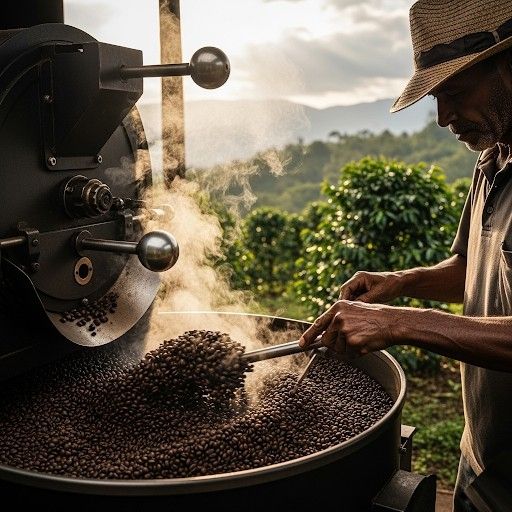
From Farm to Cup: The Journey of Jamaican Blue Mountain Coffee
1. Cultivation in the Blue Mountains
Grown at elevations between 2,000 and 5,500 feet in the Blue Mountains, this coffee benefits from the region’s cool, misty climate and rich, well-drained soil—ideal conditions for cultivating the Arabica Typica variety. The high altitude and specific microclimate contribute to the beans’ unique flavor profile.
2. Selective Harvesting
Harvesting occurs during two main cycles: late August to early January and late January to June. Farmers employ selective hand-picking methods, choosing only fully ripe cherries to ensure optimal quality.
3. Wet Processing Method
Post-harvest, the cherries undergo wet processing. This involves removing the outer skin and mucilage, followed by fermentation and thorough washing. The beans are then dried either under the sun or using mechanical dryers, depending on weather conditions.
4. Drying and Curing
After washing, the beans are dried to reduce moisture content, a process that can take several days. Once dried, the beans are cured—rested in controlled conditions—to stabilize their moisture content and develop flavor complexity.
5. Hulling and Sorting
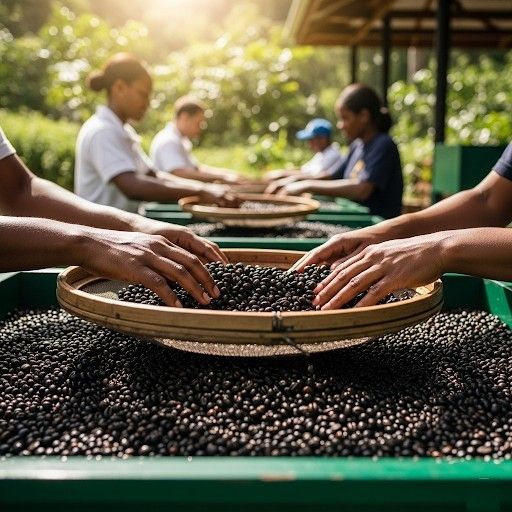
The cured beans undergo hulling to remove the parchment layer, revealing the green coffee beans. These are then meticulously sorted and graded based on size, weight, and appearance. Grades include No. 1, No. 2, No. 3, Peaberry, and Triage, with No. 1 being the highest quality.
6. Inspection and Certification by JACRA
Before export, the Jamaica Agricultural Commodities Regulatory Authority (JACRA) inspects and certifies the beans. JACRA ensures that only coffee grown within the designated Blue Mountain region and meeting strict quality standards bears the “Jamaica Blue Mountain” label. Each certified batch receives a unique identification number, enhancing traceability and authenticity.
7. Export and Global Distribution
Certified beans are packed into traditional wooden barrels or bags and exported worldwide. Japan is the largest importer, consuming a significant portion of the annual production. Other markets include the United States, Europe, and various Caribbean nations.
Safeguarding Authenticity and Quality
To combat counterfeiting, JACRA has implemented measures such as:
Geographical Indication (GI) Protection: Ensuring only coffee from the specified Blue Mountain region is labeled accordingly.
Certification Seals: Each package bears a seal with a unique ID number for traceability.
Blockchain Technology: Introducing QR codes on packaging to provide consumers with detailed information about the coffee’s origin and processing.
Economic and Environmental Considerations
The Jamaican government, through initiatives like the Crop Restoration and Establishment Programme (CREP), aims to boost coffee production and support farmers. CREP focuses on replanting efforts and improving farming practices to increase yields and sustainability.
Environmental stewardship is also a priority. Many farms employ shade-grown techniques and proper waste management during processing to minimize ecological impact. While not all farms are certified organic, there is a general emphasis on sustainable practices.
The journey of Jamaican Blue Mountain Coffee from farm to cup is a testament to meticulous cultivation, processing, and regulation. Each step is designed to preserve the coffee’s unique qualities and uphold its esteemed reputation. For consumers seeking an exceptional coffee experience, Jamaican Blue Mountain Coffee offers a blend of rich history, stringent quality control, and unparalleled flavor.

Recent Comments