

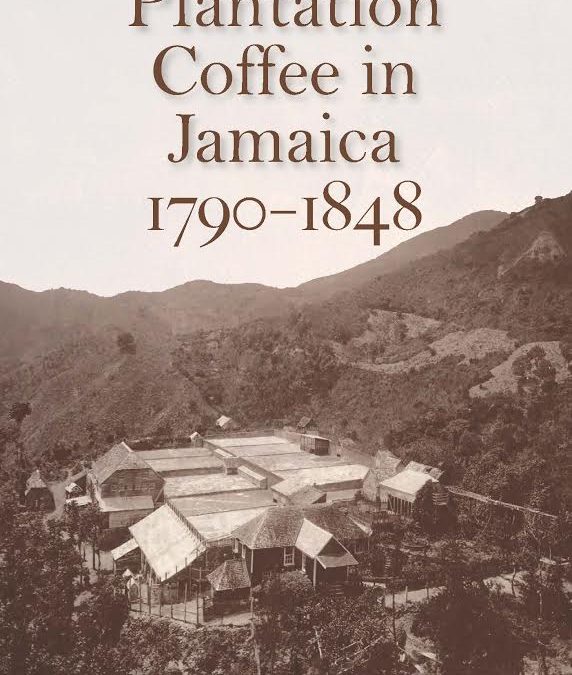
A comprehensive review of Kathleen E.A. Monteith’s groundbreaking study for modern coffee traders
Introduction: Rediscovering Jamaica’s Coffee Heritage
In the world of specialty coffees, Jamaica’s Blue Mountain coffee occupies a legendary status, renowned for its mild flavor and lack of bitterness, and commanding among the highest prices on the global market. Yet few in the coffee trade fully appreciate the deep historical roots that shaped this exceptional agricultural product. Kathleen E.A. Monteith’s seminal work, Plantation Coffee in Jamaica, 1790-1848, published by the University of the West Indies Press, provides the first comprehensive history of the island’s coffee industry during its most formative period.
This groundbreaking study, recognized as a finalist in both the 2020 Next Generation Indie Book Awards and the 2021 International Book Awards, offers more than just historical account—it presents an evidence-based analysis of the economic, social, and agricultural factors that defined Jamaican coffee’s unique trajectory. For today’s coffee professionals at Island Coffee Traders, understanding this history provides valuable context for the premium position that Jamaican coffees hold in the contemporary marketplace. Monteith, a Senior Lecturer in History at the University of the West Indies with extensive publications on Caribbean economic history, brings scholarly rigor and fresh insights to this previously understudied aspect of Jamaica’s agricultural heritage.
Mapping the Expansion of Jamaican Coffee Cultivation
The late 18th century marked a rapid expansion of coffee cultivation across Jamaica, transforming both the economic landscape and physical terrain of the island. Monteith’s research documents how approximately 700 plantation complexes extended into the mountainous interior during this period, fundamentally altering land use patterns . Unlike the sugar industry that dominated coastal plains, coffee found its ideal growing conditions in the higher elevations of Jamaica’s interior, leading to settlement and agricultural development in previously underutilized regions.
The book provides detailed analysis of the parish-by-parish distribution of coffee properties, comparing data from 1799 and 1836 to illustrate the geographic spread and concentration of production. These coffee estates were notably smaller economic units than sugar plantations, requiring less capital investment and therefore attracting a more diverse group of owners. This difference in scale and topography would have profound implications for not only the social structure of coffee-growing regions but also the distinct agricultural practices that developed in these microclimates—practices that would eventually contribute to the unique terroir characteristics that modern coffee traders recognize in Jamaican coffees today.
The Coffee Planters: A Distinctive Class
One of Monteith’s most significant contributions lies in her detailed demographic profiling of the coffee planters, whom she identifies as a distinct class among the “other whites” in Jamaican society . Drawing on recently available sources including the Legacies of British Slave-Ownership database and genealogical records, she reveals a planter community far more diverse than the sugar elite that has traditionally dominated historical accounts of plantation Jamaica.
Resident Owners: Unlike absentee sugar proprietors, coffee planters were primarily resident-owners who lived on their properties, creating different management approaches and community dynamics.
Social Diversity: Monteith’s research uncovers considerable diversity in terms of gender, national origin, and race among coffee planters, including women, Jewish entrepreneurs, and free people of color who seized economic opportunities in this sector.
Social Mobility: The coffee industry provided avenues for upward social mobility, with successful coffee planters sometimes entering the political arena—the book identifies several who served in the Jamaican House of Assembly between 1772 and 1850.
This heterogeneous planter class, with their direct involvement in operations and diverse backgrounds, may have influenced the varied approaches to coffee cultivation and processing that developed across the island—a diversity that continues to characterize Jamaica’s coffee landscape today.
Coffee Cultivation and Processing Methods
Monteith provides extensive detail on the agricultural and processing techniques employed on Jamaican coffee plantations, offering historical insights that may resonate with modern coffee professionals. The book describes the specific tools used for cultivation, the layout of ideal coffee plantation settlements, and the processing infrastructure that represented significant investment in the industry.
The industrial architecture of coffee production included:
Pulping and Grating Mills: Early processing equipment that removed the outer fruit from coffee beans.
Water-Powered Coffee Mills: More advanced technology that utilized Jamaica’s abundant water resources for mechanical processing.
Cattle-Powered Mills: Animal-driven processing equipment for locations where water power was impractical.
Barbecues: Extensive drying platforms that became characteristic features of coffee plantations, where beans were carefully dried in the tropical sun.
The book includes remarkable illustrations and plantation plans that show the layout of these processing facilities, including the ideal settlement design that positioned the factory works at the center of the operation. These historical processing methods, developed and refined during the industry’s expansion, established technical foundations that would influence Jamaican coffee production long after the plantation era.
The Enslaved Workforce: Labor and Resistance
Any complete history of Jamaican coffee must confront the brutal reality that this agricultural enterprise was built through the forced labor of enslaved Africans and their descendants. Monteith dedicates significant attention to the experiences of the enslaved men, women, and children whose labor powered the coffee industry . Her research provides detailed analysis of their work regimens, living conditions, and persistent resistance to enslavement.
The organization of labor on coffee plantations followed a strict hierarchy, with detailed occupational classifications identified in Monteith’s research of plantation records. The enslaved workforce included not only field laborers but also skilled tradespeople critical to the operation—carpenters, coopers, masons, and boilermen who maintained the processing infrastructure.
Monteith’s analysis of the enslaved population reveals a workforce that was predominantly young and aged by the second decade of the 19th century, a consequence of the abolition of the transatlantic slave trade in 1807 which cut off new labor supplies . This demographic reality forced planters to rely on an increasingly creole (Jamaican-born) enslaved population, with implications for labor management and cultural retention.
Perhaps most significantly for the historical narrative, Monteith documents how resistance to enslavement manifested on coffee properties, including through acts of sabotage, work slowdowns, and escape attempts . The constant tension between planters and the enslaved population shaped daily operations and ultimately influenced the industry’s trajectory, particularly as the abolition of slavery approached in the 1830s.
Profitability and Global Competition
As a work of economic history, Monteith’s book provides rigorous analysis of the financial performance of the coffee industry and its position within the emerging global economy of the early 19th century . The research demonstrates that Jamaican coffee experienced a period of remarkable dominance in world markets before entering a protracted decline.
The Jamaican coffee industry operated during a period of significant structural shifts in the global economy, with increasing competition from other producing regions and changing trade patterns that affected profitability. Monteith’s econometric analysis tracks changing production levels, trade volumes, and profitability across the industry’s life cycle.
Key factors in the industry’s decline included:
International Competition: The rise of coffee production in other regions, particularly Brazil and other Latin American countries, created intense price competition.
Soil Exhaustion: Continuous cultivation in the mountainous regions led to erosion and decreasing yields over time.
Labor Challenges: The increasing costs and instability of labor, particularly as emancipation approached and newly freed people sought alternatives to plantation work.
This historical context of boom and bust, quality versus quantity, and the challenges of maintaining market position against global competition provides valuable perspective for modern coffee traders operating in an equally dynamic and competitive marketplace.
Emancipation and the Labor Crisis
The period following full emancipation in 1838 brought fundamental changes to the Jamaican coffee industry, as Monteith meticulously documents in her final chapters. The clash of interests between newly freed people seeking autonomy and planters desperate to maintain a reliable workforce created immediate labor conflicts throughout the coffee sector.
The heart of this conflict lay in dramatically different conceptions of freedom and economic interest:
Planter Perspectives: Coffee planters implemented cost-reducing measures and attempted to maintain control over labor through wage policies and estate housing .
Worker Priorities: Newly emancipated people sought to distance themselves from plantation labor, establishing independent settlements and developing their own small business enterprises .
This fundamental conflict led many former enslaved people to withdraw not only their labor but their residences from plantation lands, becoming what Monteith identifies as Jamaica’s “new small settler class” in the post-slavery period . Many established independent farms on marginal lands, sometimes supplying the very coffee industry they had left while building autonomous economic foundations for their communities.
This post-emancipation transformation created the foundation for Jamaica’s smallholder coffee farming tradition, which would eventually become integral to the industry structure that exists today—a combination of larger estates and small independent farmers that continues to characterize Jamaican coffee production.
Conclusion: Historical Legacy and Contemporary Relevance
For Island Coffee Traders and other modern coffee professionals, Monteith’s Plantation Coffee in Jamaica, 1790-1848 offers more than historical insight—it provides essential context for understanding the unique position of Jamaican coffee in today’s specialty market. The historical patterns she identifies—the distinctive topography of coffee growing regions, the diverse ownership models, the quality-focused processing methods, and the persistent tension between large estates and smallholders—all find their echo in the contemporary Jamaican coffee landscape.
The transformation of Jamaican coffee from a bulk commodity that briefly dominated world markets in the early 19th century to a premium specialty product by the late 19th century represents one of the most remarkable transitions in agricultural history . The emergence of the Blue Mountain brand, first recognized as the world’s finest coffee in the 1880s, built upon centuries of accumulated knowledge, distinctive terroir, and processing expertise that developed during the very plantation era Monteith documents.
Today, as Jamaican coffee maintains its iconic status despite representing just 0.1% of world production, understanding this deep history becomes not merely academic but practically valuable for anyone engaged in trading, marketing, or preserving the legacy of this exceptional agricultural product . Monteith’s work reminds us that the coffees we trade today carry with them not just flavor profiles and chemical compositions, but centuries of history, struggle, and adaptation that make each cup part of a continuing story.
Plantation Coffee in Jamaica, 1790-1848 (2019) is available in paperback and eBook formats from the University of the West Indies Press.

Recent Comments