

The Bitter Brew of History
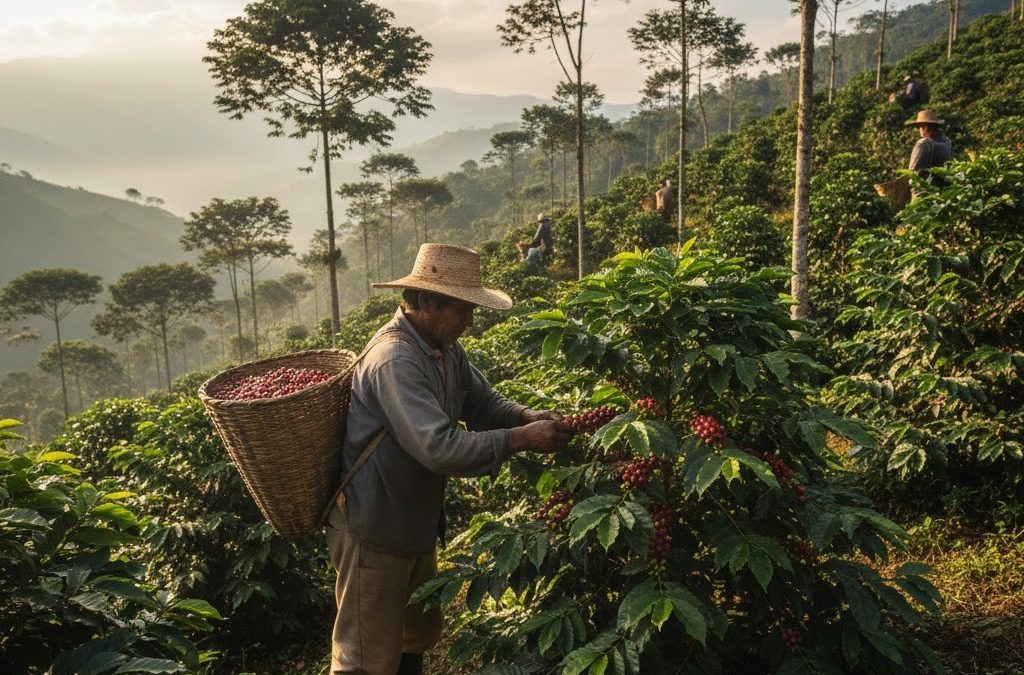
The steaming cup of coffee that begins mornings for millions of people worldwide represents more than just a caffeine infusion—it embodies a complex global history intertwined with racial exploitation, colonial power dynamics, and ongoing economic disparities. While coffee today symbolizes productivity, community, and comfort for many consumers, its production remains deeply connected to historical and contemporary patterns of racial injustice. This article examines coffee through a racial lens, tracing its journey from African origins to global commodity, exploring how centuries of exploitation continue to shape the modern coffee industry, and highlighting transformative movements working toward a more equitable future.
The global coffee industry generates billions annually, yet the overwhelming majority of profits flow to white-owned corporations in consuming nations while Black and Brown farmers in producing countries struggle with poverty. This disparity is not accidental but rooted in historical structures of colonialism and slavery that established racial hierarchies within coffee production and trade. By understanding this racial context, consumers can make more ethical choices, and industry participants can work toward meaningful reparations and equity.
Historical Roots: Colonialism and Slave Labor
Coffee’s origins trace back to the highlands of Ethiopia, where indigenous communities first discovered and cultivated the plant. According to Ethiopian folklore, a goat herder named Kaldi noticed his animals becoming energized after eating coffee cherries, leading to the discovery of coffee’s stimulating properties. From these African beginnings, coffee spread through trade networks to Yemen and throughout the Arab world, where it became an important part of social and religious rituals.
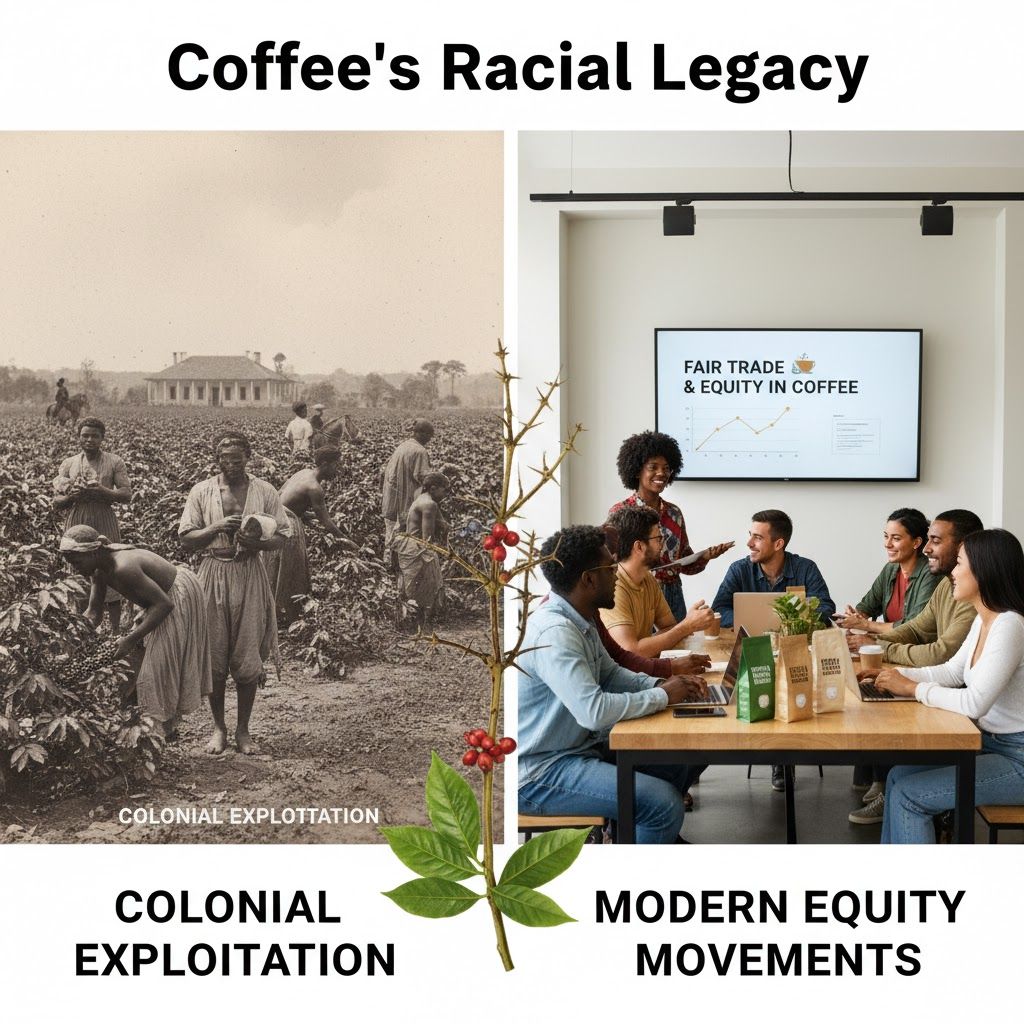
The transformation of coffee from a regional beverage to a global commodity began with European colonization. When coffee gained popularity in Europe in the 17th century, colonial powers established plantation systems in their tropical colonies across the Caribbean, Latin America, and Asia. These plantations relied on brutal slave labor to meet growing European demand. As noted by coffee historian Phyllis Johnson, “The first coffees exported to North America and Europe were harvested by slaves.” The Trans-Atlantic slave trade became inextricably linked with coffee production, with approximately 12.5 million Africans forcibly transported to work on plantations, including coffee estates.
The Plantation System and Its Legacy
On coffee plantations, enslaved people endured horrific conditions—long hours, malnutrition, crowded living quarters, and severe physical punishment. The French colony of Saint-Domingue (now Haiti) and Portuguese-controlled Brazil became particularly notorious for their brutal coffee plantations. Brazil received nearly 5 million enslaved Africans, more than any other country, with many forced to work on coffee plantations. The economic success of coffee production in colonies directly enriched European colonizers and built wealth that would later fuel industrialization, while systematically denying compensation and agency to African laborers.
Even after the formal abolition of slavery, coffee production continued to rely on exploitative labor systems. Former slaves and indigenous people were often forced into debt peonage or sharecropping arrangements that prevented economic mobility. This historical exploitation established patterns of racialized economic disparity that persist in coffee-producing regions today, where land ownership remains predominantly in the hands of white descendants of colonizers while people of color provide most of the labor.
Modern Economic Disparities and Racial Inequalities
The global coffee industry continues to reflect and reinforce racial hierarchies established during the colonial period. Today, coffee is grown primarily in countries across Latin America, Africa, and Asia, while consumption and profit concentration occur mainly in North America and Europe. This geographic division aligns closely with racial and economic divides, with people of color in the Global South producing coffee for predominantly white consumers in the Global North.
Persistent Economic Inequities
Despite coffee’s popularity and market value, many coffee farmers struggle with extreme poverty and lack of resources. In Brazil, the world’s largest coffee producer, coffee farmers receive only about 2% of the retail price of their coffee. This economic injustice has direct racial dimensions, as noted in one analysis: “Coffee continues to be grown by indigenous people and communities of color, often in impoverished communities.” The racial wealth gap in coffee-producing nations often mirrors patterns established during colonialism, with white descendants of colonizers maintaining disproportionate land ownership and wealth.
The economic disparities in the coffee industry reveal stark contrasts between consuming and producing nations. The Global North (primarily Europe and North America) retains 85-98% of the retail value of coffee, while the Global South (producing nations) receives only 2-15% of that value. The roles are similarly divided: the Global North focuses on marketing, branding, and retail operations, while the Global South handles the growing, harvesting, and processing. The primary beneficiaries in the North are white-owned corporations, while Black and Brown farmers in the South often live in poverty despite their essential role. This system concentrates economic power in the North, which controls pricing, standards, and distribution, while producers in the South remain subject to volatile commodity markets.
Child Labor and Cycle of Poverty
The economic pressures on coffee farmers have led to persistent child labor problems. In Brazil, the child labor rate is approximately 37%, as families struggling with poverty often pull children out of school to work on plantations. This creates a cycle of poverty that prevents educational advancement and economic mobility, disproportionately affecting communities of color. The racial dimensions of this exploitation are evident in the fact that the same communities whose ancestors were enslaved often continue to provide the most exploited labor in coffee production.
Cultural Appropriation and Erasure
Beyond economic exploitation, the coffee industry has exhibited patterns of cultural appropriation that further compound racial injustices. Coffee’s cultural origins have been largely erased from its mainstream narrative, with Western companies appropriating and commodifying the beverage while distancing it from its African and Middle Eastern roots.
Stripping Cultural Context
Coffeehouses, which originated in the Arab world as centers of social and intellectual exchange, were appropriated and transformed by Europeans. The rich traditions and rituals surrounding coffee preparation and consumption in Ethiopia, Yemen, and Turkey were largely discarded as coffee was integrated into European culture. This process of cultural stripping extended to the modern specialty coffee movement, which often presents itself as a Western innovation while overlooking the centuries of knowledge developed by coffee-producing communities.
The specialty coffee industry has been criticized for reinforcing white aesthetics and standards of quality while devaluing the perspectives and preferences of coffee-producing communities. As one analysis notes, “The very acceptance of the term ‘specialty coffee’ suggests that some coffee is somehow superior to others, an idea that is rooted in whiteness.” This creates dynamics where white consumers and businessmen become the arbiters of quality for a product grown by people of color, reproducing colonial patterns of cultural domination.
Marketing and Representation
Marketing patterns in the coffee industry also reflect racial biases. Studies have shown that coffee marketing, particularly for gourmet products, predominantly targets white consumers, while communities of color are more frequently targeted with advertisements for energy drinks and sodas. This racialized marketing contributes to disparities in consumption patterns, with African Americans consuming less gourmet coffee daily compared to white Americans.
Furthermore, the representation of coffee professionals in media and marketing materials often overlooks people of color, reinforcing the perception that coffee consumption is a white activity despite its origins and production being dominated by people of color. This erasure extends to the lack of recognition for the expertise and contributions of Black and Brown farmers to coffee quality and innovation.
Representation in the Coffee Industry
The racial disparities in coffee extend beyond production to include representation within the industry itself. In consuming countries like the United States, the coffee business remains disproportionately white, particularly in leadership positions and ownership roles.
Diversity Deficits in Coffee Companies
Major coffee chains have faced criticism for their lack of diversity. Starbucks, despite pledging to increase diversity after the murder of George Floyd, has shown limited progress in racial representation. From 2020 to 2022, the company showed less than 1 percentage point improvement in Black representation among store managers and no significant change among baristas and shift supervisors. Other chains show similar patterns, with Peet’s Coffee reporting eight White workers for every one Black employee in 2019.
The representation crisis extends beyond large chains to the specialty coffee sector. Keith Hawkins, founder of the Color of Coffee Collective, describes how people of color in the industry frequently face barriers to advancement: “Regardless of what I knew, regardless of how much I poured into the industry, I came to the real realization that most of these companies only wanted certain people, specifically blond hair and blue-eyed White men, to represent them.”
Representation in coffee industry roles shows significant disparities across positions. People of color have moderate representation in entry-level barista positions but face limited advancement opportunities. Store management roles show low representation due to bias in promotion decisions. Corporate leadership has very low representation resulting from gatekeeping and exclusionary hiring practices. Coffee shop ownership shows minimal representation, largely due to limited access to capital and industry networks for entrepreneurs of color.
Daily Discrimination and Microaggressions
People of color working in coffee spaces frequently experience discrimination and microaggressions. Porttia Portis, who has worked in coffee management for over a decade, describes how customers often refused to believe she was the manager: “Everyone in the room could tell a customer that I was the most knowledgeable person, that I was the manager, and they would look me dead in my face and be like, ‘I want to talk to someone else.'” These daily experiences of discrimination create hostile work environments and push people of color out of the industry.
The specialty coffee scene has developed a reputation for exclusionary practices that marginalize people of color, both as professionals and as customers. Many coffee shops become symbols of gentrification, displacing longstanding communities of color while catering primarily to white affluent customers. This dynamic reinforces the perception that specialty coffee spaces are predominantly white domains, despite coffee’s African origins and the majority-Brown labor force that produces it.
Contemporary Movements and Solutions
In response to these historical and contemporary inequities, various movements have emerged to address racial justice in the coffee industry. These initiatives range from individual entrepreneurs creating alternative business models to coalition efforts aimed at industry-wide transformation.
Black-Owned Coffee Businesses
A growing number of Black entrepreneurs are creating coffee businesses that directly challenge historical patterns of exploitation. Raphael Brandão, a Brazilian coffee producer, founded Cafe di Preto with the specific mission of working exclusively with Black farmers. His brand celebrates Black contributions to coffee production and seeks to “reverse this logic that Black people are mere laborers.” The company’s logo features a raised Black fist clutching a coffee branch, and each coffee variety is named after important Black women in Brazilian history.
Brandão’s approach represents a form of economic reparations within the coffee industry. By creating direct relationships with Black farmers and ensuring they receive fair compensation, he challenges the racial wealth gap that characterizes conventional coffee trading. Similar efforts have emerged elsewhere, including Coffee Coalition for Racial Equity working to promote diversity and inclusion throughout the coffee industry.
Certification and Conscious Consumerism
Fair Trade certification and other ethical sourcing programs represent another approach to addressing inequities in coffee. These certifications aim to ensure that farmers receive fair prices for their crops, promoting sustainable farming practices and community development initiatives. While not explicitly focused on racial justice, these programs indirectly address racial disparities by seeking to improve economic conditions in coffee-producing communities, which are predominantly communities of color.
Conscious consumerism has emerged as a potential force for change, with increasing numbers of consumers seeking out ethically sourced coffee and supporting Black-owned coffee businesses. During Black History Month, many organizations highlight the importance of supporting Black coffee entrepreneurs and learning about coffee’s racial history. These educational efforts aim to raise awareness about the racial dimensions of coffee production and consumption.
Conclusion: The Path Forward
The racial context of coffee reveals a complex history of exploitation and appropriation, but also points toward possibilities for redemption and equity. Addressing coffee’s racial legacy requires acknowledging the historical injustices that shaped the industry and recognizing their contemporary manifestations in economic disparities, cultural erasure, and representation gaps.
Toward a More Equitable Future
Creating a more racially just coffee industry requires multidimensional approaches:
1. Economic reparations: Establishing direct trade relationships that ensure fair compensation for farmers of color, supporting Black-owned coffee businesses, and addressing the racial wealth gap in coffee-producing regions.
2. Representation and diversity: Actively working to increase diversity at all levels of the coffee industry, particularly in leadership positions, and creating inclusive environments that welcome people of color as professionals and consumers.
3. Education and awareness: Incorporating honest discussions about coffee’s racial history into industry events, marketing materials, and consumer education, acknowledging the contributions and exploitation of people of color throughout coffee history.
4. Community empowerment: Supporting initiatives that provide resources, training, and market access to coffee farmers of color, particularly those who are first-generation land owners challenging historical patterns of land dispossession.
Personal and Collective Action
Individual consumers can contribute to racial equity in coffee by seeking out and supporting Black-owned coffee brands, choosing ethically sourced coffee that ensures fair compensation for farmers, and educating themselves about coffee’s racial history. Industry professionals can advocate for diverse representation within their organizations, examine hiring and promotion practices for racial biases, and build direct relationships with farmers of color.
Ultimately, addressing coffee’s racial legacy requires both personal responsibility and structural transformation. By acknowledging the bitter history behind our daily brew, we can work toward a future where coffee becomes a vehicle for economic justice, cultural appreciation, and racial reconciliation rather than perpetuation of historical inequalities. As Raphael Brandão demonstrates through his work with Cafe di Preto, coffee has the potential to serve as a means of “historical reparations” that acknowledges the past while building a more equitable future.

Recent Comments