
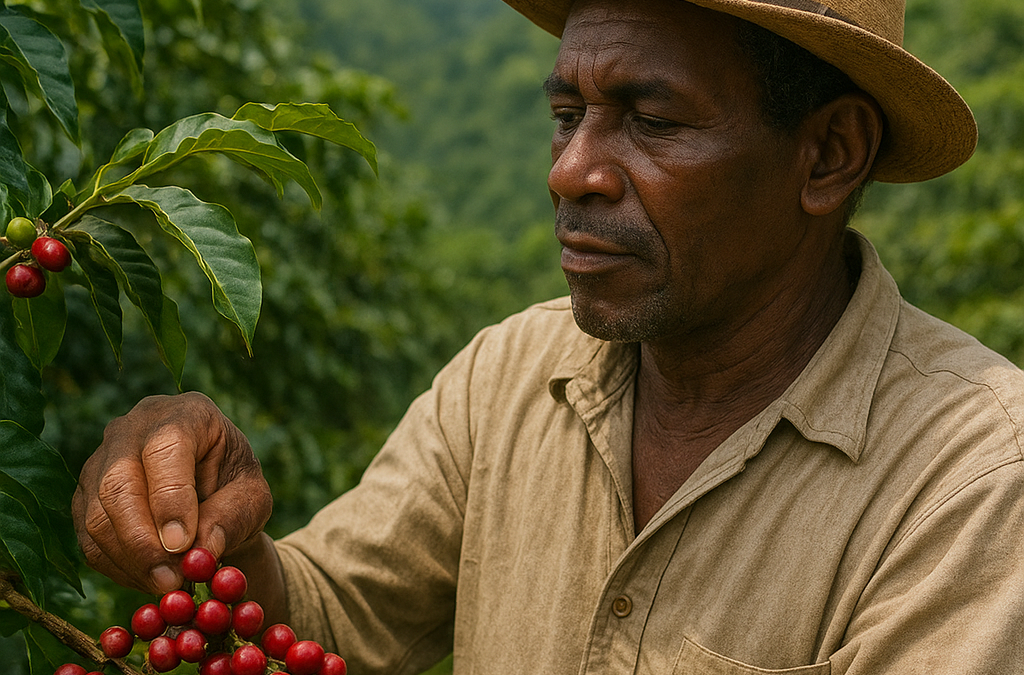
For Island Coffee Traders and every Jamaican coffee lover, the aroma of a freshly brewed cup of Blue Mountain coffee is more than a sensory pleasure; it’s a taste of history, terroir, and unparalleled quality. This globally revered coffee, grown in the misty, mineral-rich slopes of the Blue Mountains, represents an agricultural crown jewel. Yet, for decades, this jewel has been under a persistent and devastating threat: Hemileia vastatrix, more commonly known as Coffee Leaf Rust (CLR).
This fungal pathogen is the arch-nemesis of coffee growers worldwide, and Jamaica has not been spared. Understanding its history, its current impact, and the innovative fight against it is crucial to safeguarding the future of Jamaica’s iconic coffee industry.
A Historical Shadow: The Arrival of the Rust
Coffee Leaf Rust is not a new adversary. It originated in the East African highlands, co-evolving with the Coffea arabica plant. The global spread began in the late 19th century, leaving a trail of destroyed coffee industries from Ceylon (now Sri Lanka) to Indonesia.
For Jamaica, the story of CLR is one of a long-held fortress finally breached. For over a century, the island’s geographic isolation acted as a natural barrier. While Central and South America battled devastating outbreaks throughout the 20th century, Jamaica remained one of the last rust-free sanctuaries for Arabica coffee.
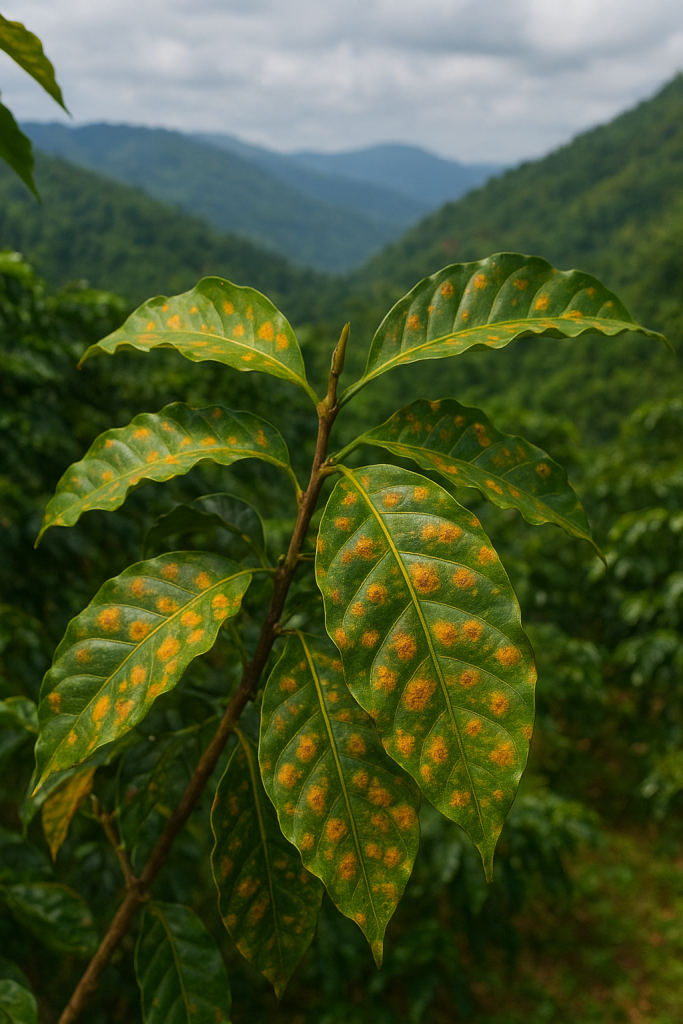
This fragile immunity ended in the late 1980s or early 1990s. The exact date of its arrival is debated, but the impact was immediate and stark. The fungus, likely transported by wind or on unknowing travelers, found a perfect environment in Jamaica’s humid microclimates. The tell-tale signs appeared: bright orange, powdery spots on the undersides of leaves, leading to defoliation, crippled cherry development, and, in severe cases, the death of the coffee plant.
The initial response was a combination of shock and a scramble for solutions. Farmers, many with generations of knowledge but none of rust, turned to the primary tool available at the time: chemical fungicides. While necessary, this was a costly and unsustainable strategy, particularly for the many smallholder farmers who form the backbone of the Jamaican coffee landscape.
The Current Landscape: A Persistent, Managed Threat
Today, Coffee Leaf Rust is endemic to Jamaica. It is not a question of if it will appear each year, but when and how severely. The severity of each season’s outbreak is a direct function of weather patterns:
Rainfall & Humidity: Extended rainy periods and high humidity, especially following a dry spell, create the ideal conditions for rust spores to germinate and spread.
Temperature: Warm temperatures (21-25°C / 70-77°F) accelerate the disease’s life cycle.
Altitude: While the cooler temperatures of the higher Blue Mountain slopes (above 2,000 feet) can slightly slow the spread, the rust is present throughout the island’s coffee-growing regions.
The economic impact is twofold:
1. Yield Reduction: Infected plants divert energy from producing coffee cherries to fighting the disease, leading to significantly lower yields and inferior bean quality.
2. Increased Production Costs: Farmers must invest heavily in fungicide sprays and the labor required to apply them, eroding their profit margins.
The modern approach in Jamaica has evolved from eradication to Integrated Pest Management (IPM). This holistic strategy combines several practices:
Careful Shade Management: Pruning shade trees to improve air circulation and reduce leaf wetness duration.
Strategic Fertilization: Keeping plants healthy and vigorous with balanced nutrition so they can better resist infection.
Pruning: Removing infected branches and heavily diseased trees to reduce spore load.
Targeted Fungicide Application: Using fungicides more judiciously, often based on weather forecasting models that predict high-risk infection periods, rather than on a rigid calendar schedule.
Innovation on the Frontlines: Securing Jamaica’s Coffee Future
The long-term survival of Jamaican coffee, particularly its prized Typica variety (which is highly susceptible to rust), depends on innovation. The fight is moving from the sprayer to the laboratory and the field, combining cutting-edge science with traditional wisdom.
1. Resistant Varieties: The Genetic Solution The most promising long-term strategy is the development and cultivation of rust-resistant coffee varieties.Organizations like the Coffee Industry Board of Jamaica (CIBJ) and the Jamaica Agricultural Commodities Regulatory Authority (JACRA) are actively researching and promoting hybrids.
These aren’t just any hybrids; they are crosses between traditional Arabica for quality and other species (like Coffea canephora / Robusta) for disease resistance. Modern varieties like Marsellesa and Starmaya offer robust rust resistance while striving to maintain the complex cup profile that defines Jamaican coffee. The challenge is one of perception and patience: convincing farmers to plant these new trees and waiting the 3-4 years for them to become productive.
2. Precision Agriculture and Data Analytics Technology is making farm management smarter and more efficient.
Drones: Used for multispectral imaging to identify rust outbreaks before they are visible to the human eye. This allows for hyper-targeted treatment, saving time and reducing chemical usage.
Weather Stations: Hyper-local weather data from in-field sensors can feed into disease prediction models, alerting farmers to spray only when conditions are truly high-risk.
Mobile Apps: Apps are being developed that allow farmers to diagnose rust, track its spread on their farm, and access expert advice and market information instantly.
3. Biological Controls and Organic Solutions As global demand for organically grown coffee rises,so does research into biological fungicides. Products containing bacteria like Bacillus subtilis or fungi like Lecanicillium lecanii can act as natural antagonists to the rust fungus, suppressing its growth. While often requiring more frequent application than synthetic chemicals, they offer a tool for farmers seeking organic certification and reducing their environmental footprint.
4. Soil Health and the Microbiome Emerging science focuses on the soil.A thriving, diverse microbiome in the soil translates to a healthier plant with a stronger immune system. Practices like using compost teas, biofertilizers, and mycorrhizal fungi inoculants are being explored to build natural resilience from the roots up.
A Collective Fight for a National Treasure
The battle against Coffee Leaf Rust in Jamaica can not be won by any single farmer. It is a collective effort that involves:
Researchers develop new solutions.
Government Agencies (JACRA) providing extension services, subsidies, and guidance.
Exporters & Traders (like Island Coffee Traders) ensuring farmers receive a premium for their high-quality, well-managed crop, funding the ongoing fight.
Consumers who understand the value and story behind their cup of coffee and are willing to support sustainable practices.
The story of Coffee Leaf Rust in Jamaica is not one of defeat but of resilience. It is a continuous adaptation, a testament to the determination of Jamaican farmers to protect their legacy. Through a blend of time-honored practices, cutting-edge technology, and a shared commitment to quality, the future of Jamaica’s Blue Mountain coffee remains bright—and deliciously secure.
Island Coffee Traders is committed to partnering with Jamaican farmers who are at the forefront of implementing these sustainable and innovative practices. Every bean we source supports this ongoing mission to protect and perpetuate the unparalleled quality of Jamaican coffee for generations to come.

Recent Comments