A case for direct trade, traceability, and the value of knowing exactly where your beans come from
The Premium Is in the Provenance
Walk into any specialty café in 2027 and you’ll hear a familiar refrain: prices are up, margins are thin, and customers are asking harder questions about what they’re paying for. The roasters who thrive in this environment won’t be the ones with the cheapest green coffee. They’ll be the ones who can answer those questions with specificity, confidence, and a story that holds up to scrutiny.
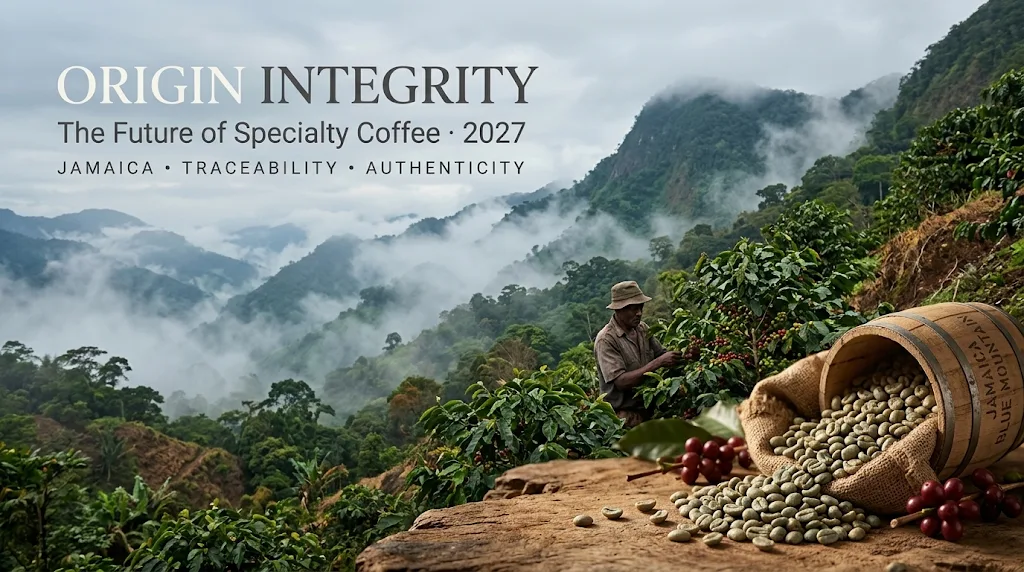
At Island Coffee Traders, that story has always been simple: 100% Jamaica Blue Mountain coffee, sourced directly from a collection of small farmers, grown in high-altitude volcanic soil under low-hanging clouds, and hand-sorted bean by bean. Nothing about that story is generic. Nothing about it can be replicated by a competitor who buys through brokers.
That specificity is the competitive moat.
Direct Trade Is No Longer a Marketing Line—It’s a Supply Chain Strategy
The 2027 outlook for specialty coffee is defined by three pressures: climate-driven supply volatility, elevated green coffee prices, and tightening traceability requirements from regulators and consumers alike. Each of these pressures rewards the same thing—short, transparent, relationship-based supply chains.
When a roaster buys through multiple layers of intermediaries, they inherit every layer’s risk. A crop failure three steps removed becomes a quality inconsistency in their cup with no warning and no recourse. When a roaster buys directly from named small farmers, as Island Coffee Traders does, the relationship becomes the risk-management system. Problems are communicated early. Quality is protected at the source. And the traceability documentation that regulators will increasingly demand already exists because the relationship was built on it.
For home roasters and small cafés, this is the practical takeaway: the green coffee you source matters as much as the roast profile you develop. A precise roaster cannot rescue inconsistent green coffee. But consistent, traceable green coffee—the kind that comes from direct relationships—gives a skilled roaster the foundation to repeat quality batch after batch.
Jamaica Blue Mountain as a Case Study in Scarcity and Value
Jamaica Blue Mountain occupies a unique position in the specialty coffee world. It is geographically protected, limited in supply, and commands a premium that reflects both scarcity and reputation. For roasters, this creates both opportunity and risk.
The opportunity is obvious: a product with built-in consumer recognition and a story that justifies premium pricing. The risk is equally clear: when your entire offering depends on a single origin with limited supply, quality control at the source is not optional. Island Coffee Traders addresses this through hand picking, washing, and individual bean sorting—labor-intensive practices that protect the integrity of a product that cannot be substituted.
This is the same logic that drives origin roasting. When the bean is irreplaceable, you protect value by controlling every step of processing, including the roast itself. The future of premium coffee involves more value being captured closer to the source—and that starts with knowing the farmers by name.
The Traceability Premium
Regulatory frameworks like the EU Deforestation Regulation are often framed as compliance burdens. For small roasters, they are better understood as a competitive filter. When traceability becomes mandatory, the roasters who already have it—because they built their business on direct relationships—gain an advantage over those scrambling to retrofit documentation onto opaque supply chains.
Island Coffee Traders’ model is inherently traceable. Small farmers, named relationships, hand-processing, single-origin integrity. The compliance work is largely done because the sourcing philosophy was never about volume at the lowest cost. It was about quality from a known place.
For roasters and café owners, the lesson is to start building that traceability into your sourcing now. Ask suppliers where the coffee comes from. Request documentation. Build relationships with importers who can answer those questions. In 2027, the roaster who can tell a customer the farm, the altitude, and the processing method will have a structural advantage over the one who can only say “it’s a nice Colombian.”
What This Means for Your Roasting
The 2027 specialty coffee market will reward precision at every stage—sourcing, roasting, and storytelling. Island Coffee Traders demonstrates the sourcing end of that equation: a product defined by origin integrity, direct relationships, and quality control that begins long before the bean reaches a roaster.
For home roasters and small commercial operators, the implication is straightforward. Invest in green coffee you can trace. Develop roast profiles you can repeat. And tell the story of both. The rest starts with knowing exactly what’s in your hopper and why it’s worth what you paid for it.
Island Coffee Traders sources 100% Jamaica Blue Mountain coffee directly from a collection of small farmers.
Why Origin Integrity Will Define Specialty Coffee’s Winners in 2027
Recent Comments